
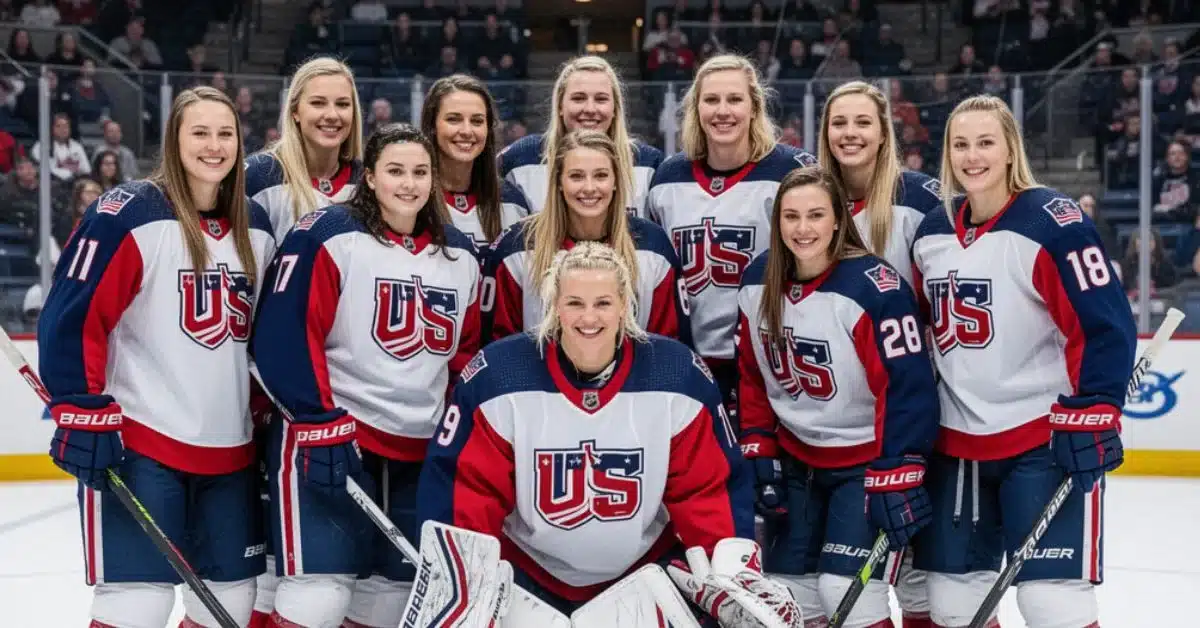
US women’s hockey team quietly pulls people back in. Not with spectacle or noise, but with a familiar intensity, fast shifts, physical play, and games that feel personal even when the stakes are global.
This team has become a constant presence in international hockey, not because it demands attention, but because it earns it.
A Program Built on Continuity and Pressure
The modern US women’s hockey team Olympic identity didn’t appear overnight. It’s the result of decades spent narrowing the gap with and often surpassing traditional powers. The rivalry with Canada women’s national ice hockey team has shaped nearly every era, turning routine tournaments into measuring sticks for progress.
When fans check the us women’s hockey team score or glance at a us women’s hockey team box score, the numbers rarely tell the whole story. This group wins with structure. Defensive discipline matters as much as scoring depth. Special teams aren’t just tactical moments; they’re tone-setters.
Roster Choices That Reflect the Moment
Every season brings speculation around the US women’s hockey team roster, and for good reason. Selection isn’t only about talent. It’s about balancing veteran leadership blended with players still learning how to manage pressure on the international stage.
As discussions shift toward the US women’s hockey team olympic roster, those decisions become even sharper. Experience matters, but so does adaptability. Olympic hockey demands quick learning, emotional control, and comfort playing unfamiliar opponents on short rest.
Why the Schedule Matters More Than Ever
For casual fans, the u.s. The women’s hockey team schedule can feel like a blur of exhibition games and international tournaments. But each matchup serves a purpose.
Games like the US women’s hockey team vs Finland are often about systems testing, seeing how defensive schemes hold against disciplined, structured opponents like Finland women’s national ice hockey team. Meanwhile, the US women’s hockey team vs Canada remains the emotional centerpiece, regardless of whether it’s a world championship final or a mid-season series.
Living in Canada’s Shadow and Moving Beyond It
No rivalry in women’s hockey carries the same weight. Every US women’s hockey team vs canada matchup feels like a referendum on identity. Styles clash. Tempo shifts. Small mistakes become decisive.
The U.S. The women’s hockey team’s score in these games often reflects more than the outcome. A narrow loss can reveal progress. A decisive win can still expose vulnerabilities. This rivalry has forced both programs to evolve faster than any other nations in the sport.
The Long View Toward 2026
Conversation is already drifting toward the US women’s hockey team Olympics 2026, and that’s not premature. Olympic cycles define roster development, workload management, and long-term strategy.
The US women’s hockey team 2026 core is likely already forming, even if names aren’t finalized. Younger players are being tested now for roles they may carry in Milan. Veterans are being evaluated not just for skill, but for durability.
Fans tracking the u.s. The women’s olympic hockey team 2026 will notice fewer dramatic changes than subtle adjustments skating pace, defensive pairings, and how lines respond under sustained pressure.
Why This Team Still Resonates
The appeal of the US women’s hockey team isn’t about dominance alone. It’s about familiarity. Viewers recognize faces across cycles. They understand the stakes even without knowing every player’s stat line.
When the U.S. The women’s hockey team score flashes across a screen, it signals something dependable: structure, competitiveness, and games that reward attention.
Conclusion
In an era where sports attention comes and goes quickly, the US women’s hockey team continues to hold its place through substance rather than spectacle. The wins matter, the rivalries endure, and the Olympic horizon adds quiet urgency to every roster move and schedule decision. Whether it’s a tightly contested scoreline, a familiar showdown with Canada, or a low-profile matchup that reveals future leaders, this team reflects something rare in modern sports: continuity with purpose. As the road to 2026 slowly takes shape, the story isn’t about reinvention it’s about refinement, resilience, and staying sharp in a world that’s always catching up.