
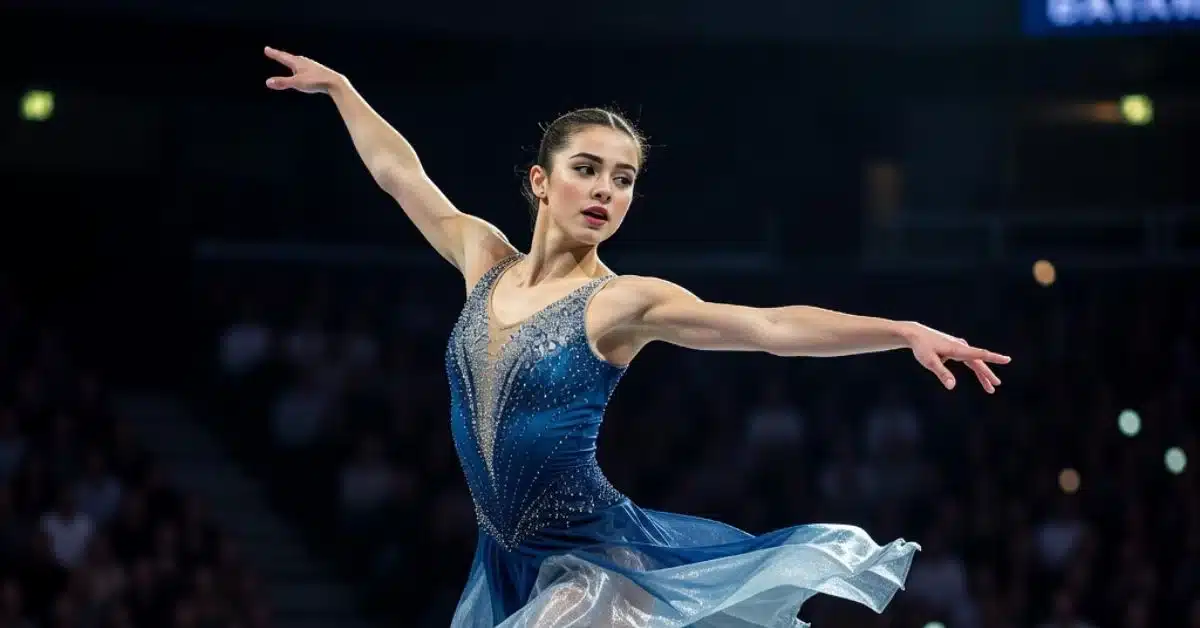
At just 18 years old, Isabeau Levito has become one of the most compelling names in figure skating. As she steps onto the Olympic stage in Milan-Cortina, her journey reflects not only years of discipline but also the quiet resilience that has defined her path. For casual readers scrolling through Google Discover, her story offers a glimpse into the making of a modern athlete, one shaped by family, culture, and the pressures of a sport that demands perfection.
Early Life and Family
Levito was born on March 3, 2007, in Philadelphia, Pennsylvania. Her parents played a central role in her upbringing, though details about her father remain less public, leading to frequent questions like “Does Isabeau Levito have a father?” The answer is yes, though her mother, Sarah Everhardt, has often been the more visible figure in her skating journey.
Her family background has sparked curiosity about her ethnicity and religion. Levito is of Italian descent, which explains her connection to Milan and her fondness for Italian culture. What ethnicity is Isabeau Levito? She identifies as Italian-American. As for religion, she has not spoken extensively about it, preferring to keep that part of her life private.
Education and Personal Details
Balancing academics with elite training is no small feat. Levito attended high school in New Jersey, where she managed coursework alongside grueling practice schedules. Questions about her next steps Isabeau Levito college plans remain open, though she has expressed interest in continuing her education while competing.
Her physical presence on the ice is striking. At 5 feet 3 inches, Isabeau Levito’s height gives her a blend of elegance and agility, allowing her to execute jumps with precision while maintaining fluid artistry.
Career Highlights
Levito began skating in 2010 and quickly rose through the ranks. By age 10, she had landed a double axel, a milestone that often determines whether young skaters continue or plateau. From there, her trajectory was steep: U.S. National Champion, Grand Prix medalist, and now an Olympian.
Her journey has not been without setbacks. Fans often ask, “Why did Isabeau Levito withdraw?” In past competitions, withdrawals were linked to injury or strategic rest, common in a sport where overtraining can derail careers. Each pause has been followed by a strong return, underscoring her resilience.
Family Ties and Cultural Identity
Levito’s Italian heritage has shaped her identity both on and off the ice. Does Isabeau Levito speak Italian? She has shared that she understands and speaks some Italian, a connection that resonates deeply as she competes in Milan. Her passion for pasta and ties to the host city add a personal layer to her Olympic debut.
Her mother, Sarah Everhardt, has been a steady presence, guiding her through the pressures of competition. The visibility of her mother compared to her father has fueled speculation, but Levito herself has kept family matters largely private, focusing instead on her craft.
Comparisons and Context
Levito’s rise comes at a time when U.S. women’s figure skating is searching for consistency. Alysa Liu, another American skater, has faced her own challenges; fans even noticed details like Alysa Liu teeth during her performances, a reminder of how closely audiences scrutinize athletes. Levito, by contrast, has drawn attention for her poise and artistry, qualities that set her apart in a field often dominated by technical execution.
Challenges Beyond the Ice
Like many athletes, Levito’s journey has included personal hurdles. Mentions of Isabeau Levito eviction surfaced in past reports, highlighting the financial and logistical strains families often face in supporting elite training. Such challenges underscore the reality that behind every polished performance lies a network of sacrifices.
The Road Ahead
As Levito competes in Milan, the questions surrounding her about ethnicity, family, and resilience add depth to her narrative. She is not just a skater chasing medals; she is a young woman navigating identity, expectation, and the spotlight. Whether she wins or not, her presence signals a new chapter for American figure skating, one defined by artistry as much as athleticism.
Conclusion
Isabeau Levito’s story is more than a list of titles. It is about a teenager balancing high school, cultural heritage, and Olympic dreams. It is about a family’s quiet support and the public’s curiosity. And it is about the enduring appeal of figure skating, where every performance is both sport and art. As she takes the ice in Milan, Levito embodies not just the promise of medals but the resilience of a generation learning to thrive under pressure.