
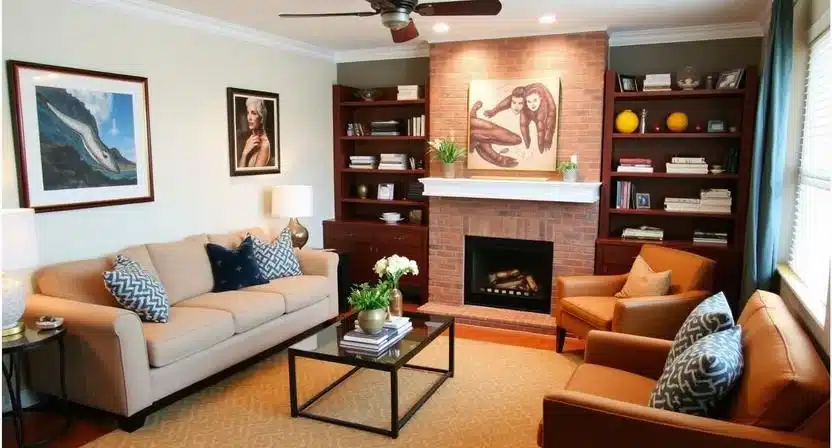
Small Living Room Decor Ideas focuses on maximizing utility and visual space through strategic furniture selection, vertical storage, and lighting. The goal is to reduce visual clutter while maintaining comfort. Key strategies include selecting modular seating with visible legs, utilizing light neutrals with high Light Reflectance Values (LRV > 70), and installing wall-mounted shelving to free up floor area. Research shows that decluttering and using vertical space can increase perceived room size by up to 20%.
What Defines a Small Living Room?
A small living room is generally classified as a room measuring less than 250 square feet, often requiring specific furniture scaling and layout techniques to ensure comfortable traffic flow.
In architectural standards, a “small” living room falls between 150 and 220 square feet. Within this footprint, the distance between major furniture pieces (sofa to coffee table, or sofa to TV unit) must be strictly maintained. The primary constraint is not just the area, but the number of entry points and windows, which dictate where furniture can logically sit.
How to Choose Furniture for a Small Living Room?
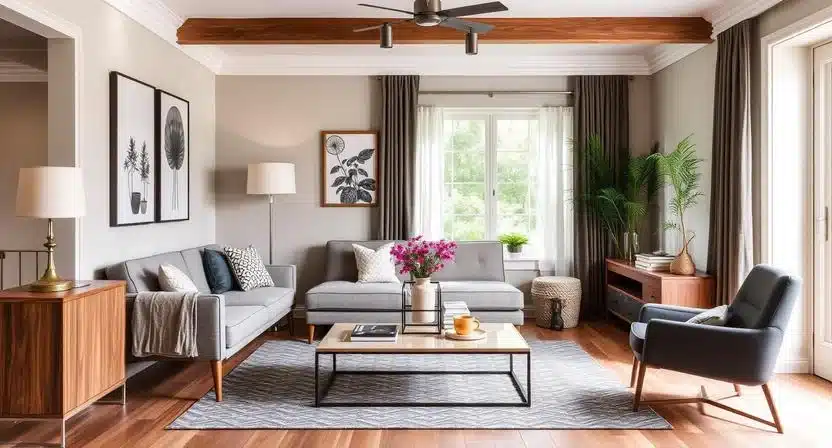
Select furniture with exposed legs, low profiles, and modular designs. These elements create visual floor space, making the room feel larger.
Specific best practices include:
- Exposed legs: Sofas and chairs with visible legs reveal the floor beneath, extending the perceived depth of the room.
- Modular seating: Consider a sectional with a chaise that can be reversed or separated to fit various layouts.
- Avoid overstuffed designs: Bulky, deep-seated furniture consumes excessive visual mass. Opt for shallow depth (under 38 inches) to maintain walkway clearance.
- Clearance: Always leave a minimum of 36 inches of walkway between the coffee table and seating to prevent obstruction.
What Are the Best Multifunctional Furniture Options?
Ottomans with internal storage, nesting tables, and sleeper sofas offer the highest return on investment for small living rooms.
- Storage Ottomans: Use these as footrests and coffee tables. They store blankets or remote controls, eliminating the need for a separate storage chest.
- Nesting Tables: These can be tucked under one another when not in use, freeing up floor space for activities or cleaning.
- Wall-Mounted Desks: If the living room doubles as a workspace, a fold-down desk attached to the wall saves permanent floor space.
How Does Color Affect a Small Living Room?
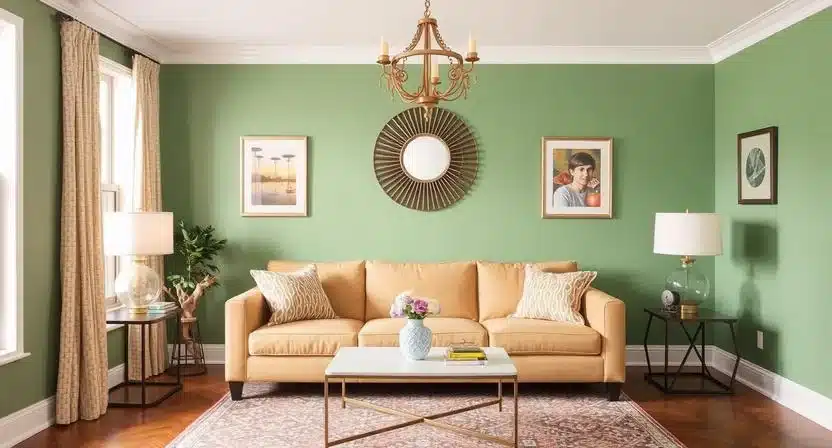
Light, reflective colors with an LRV (Light Reflectance Value) of 70 or higher expand visual space. Use the 60-30-10 rule to balance contrast without overwhelming the room.
Implementation specifics:
- Dominant (60%): Use a warm white or soft gray (e.g., Sherwin-Williams “Alabaster”).
- Secondary (30%): Apply this to upholstery or rugs. Medium-toned blues or greens add depth without darkening corners.
- Accent (10%): Reserve bold colors for accessories like throw pillows or art, which can be swapped seasonally.
Darker colors can be used effectively on an accent wall if the rest of the room is light, but avoid painting the ceiling dark, as it lowers the perceived height.
How to Maximize Vertical Storage?
Install floating shelves within 12 inches of the ceiling and use tall, narrow bookcases to draw the eye upward, extending the room’s visual height.
Practical steps:
- Above-door shelves: Utilize the space above door frames for baskets or decorative books.
- Floor-to-ceiling units: Install built-in bookcases that run from the floor to the ceiling. This creates a focal point while offering substantial storage without eating into floor width.
- Visual anchoring: Ensure the top 6 inches of the shelving unit contains lighter items (books with white spines, light decor) to prevent a heavy, “top-heavy” feel.
Lighting Strategies for Small Spaces
Layer three types of light ambient, task, and accent using fixtures that mount flush to the ceiling or walls to maximize headroom.
Specific guidelines:
- Ambient (overhead): Use flush-mount LED fixtures with a color temperature of 3000K to 4000K. Cooler light (4000K) makes a room feel more expansive, while warmer light (2700K) creates coziness.
- Task (reading): Use sconces or swing-arm lamps attached to the wall instead of bulky floor lamps.
- Accent (decorative): Place a small spotlight behind a plant to cast a shadow, which adds depth and separates the wall from the background.
Cost vs. Value in Small Living Room Decor
The following table compares typical price points and their impact on space efficiency.
| Element | Budget Option ($) | Premium Option ($$$) | Space Efficiency Impact |
|---|---|---|---|
| Seating | Loveseat (under $400) | Modular sectional ($1,200+) | Premium modulars offer lower frames for better visibility. |
| Storage | Open floating shelves ($50) | Custom built-ins ($1,500+) | Custom builds utilize irregular wall shapes optimally. |
| Coffee Table | Nesting tables ($150) | Lift-top storage table ($500) | Lift-tops double as desks, saving dedicated workspace area. |
| Lighting | Flush-mount LED ($40) | Designer dimmable sconces ($300) | Dimmer switches allow adjustment for ambiance vs. clarity. |
Best practice: Spend the majority of your budget on sofa quality and lighting flexibility, as these define daily comfort and the visual “feel” of the room.
What Layout Mistakes Reduce Space?
Pushing all furniture against the walls, blocking natural light paths, and using oversized rugs are the three most common errors that shrink a small living room.
Corrections:
- The “floating” rule: Pull the sofa 3–4 inches away from the wall. This creates a shadow line that makes the room feel wider.
- Rug sizing: Choose a rug that leaves 18 inches of floor visible on all sides. A too-large rug acts like a border, making the room feel confined.
- Furniture blocking: Never place a tall bookcase between a window and the rest of the room, as it will block natural light and create a “cave” effect.
Conclusion
Decorating a Small Living Room Decor Ideas successfully relies on scale, light, and verticality. By selecting furniture with exposed legs, utilizing the 60-30-10 color rule with high-LRV paints, and installing wall-mounted storage, you can physically and visually expand your space. Prioritize a modular layout that allows for clear walkways, and avoid the temptation to fill corners with unnecessary decor. For specific budget breakdowns, refer to the comparison table above to allocate funds where they maximize both function and aesthetics.
FAQ: Small Living Room Decor Ideas
1. What is the best color for a small living room?
Light neutrals such as warm white or pale beige with an LRV above 70 offer the best results, as they reflect maximum light to expand the visual boundaries.
2. Should I put a large rug in a small living room?
No. A rug should be slightly smaller than the room, leaving at least 18 inches of bare floor around the perimeter to make the space feel wider.
3. How can I make my small living room look bigger without painting?
Use mirrors strategically opposite windows, choose furniture with exposed legs, and switch floor lamps for wall sconces to clear floor space.
4. Is a sectional sofa good for a small living room?
Yes, but choose a compact sectional with a depth of under 38 inches and a low back to avoid overwhelming the room’s visual weight.
5. What type of lighting makes a small room feel larger?
Use flush-mount ceiling lights with a 3000K–4000K color temperature, combined with wall sconces to create a layered, expansive glow.

InfosparkUSA.com is a fast-growing digital sports media platform dedicated to delivering breaking news, sharp analysis, and compelling stories from across the sports world.